
Last updated November 2, 2026
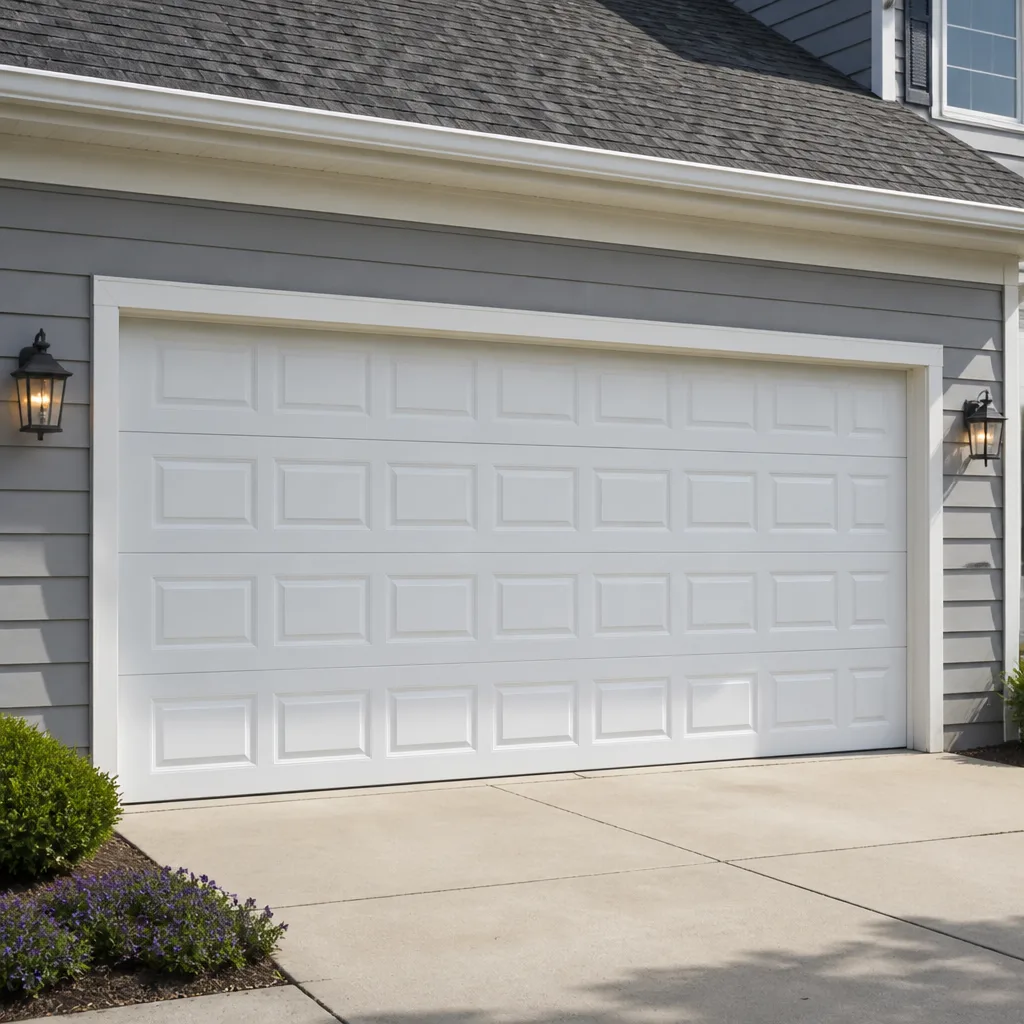 Raised-panel steel
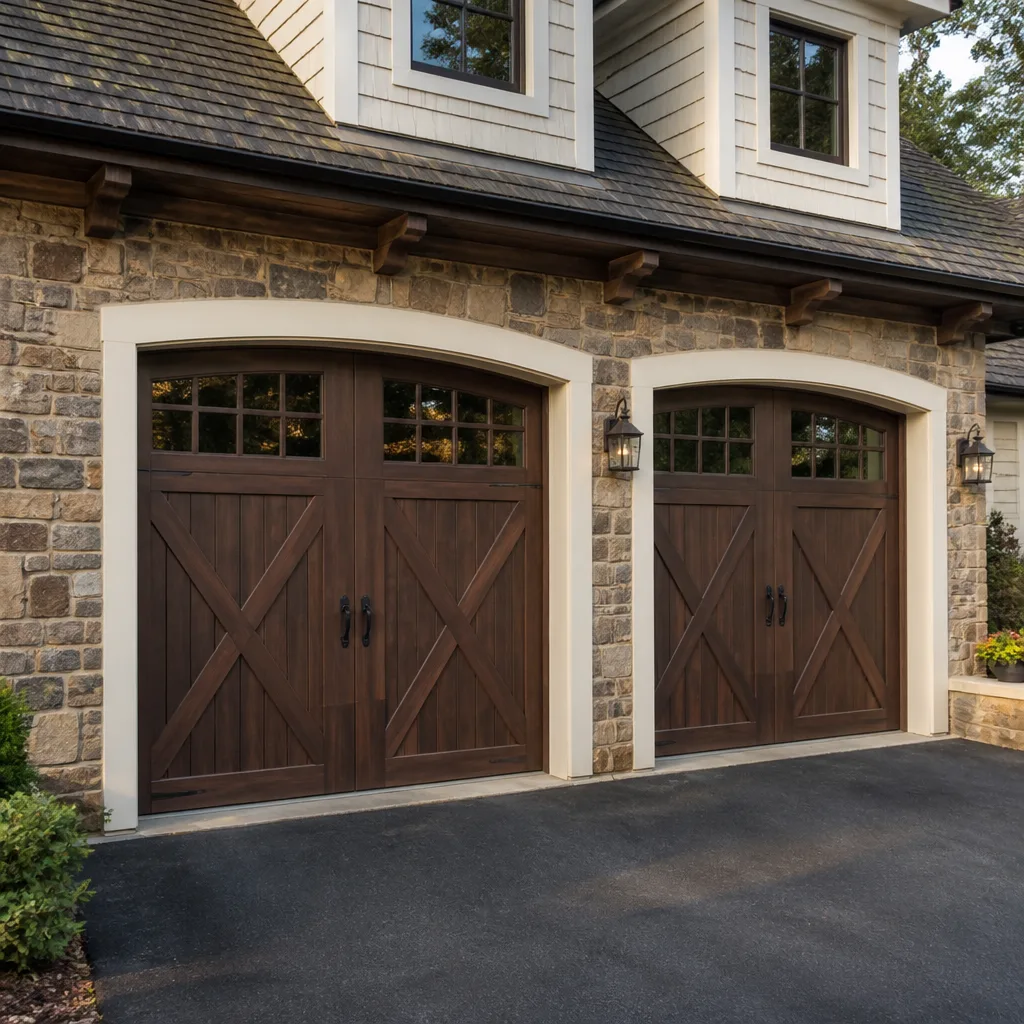 Carriage house
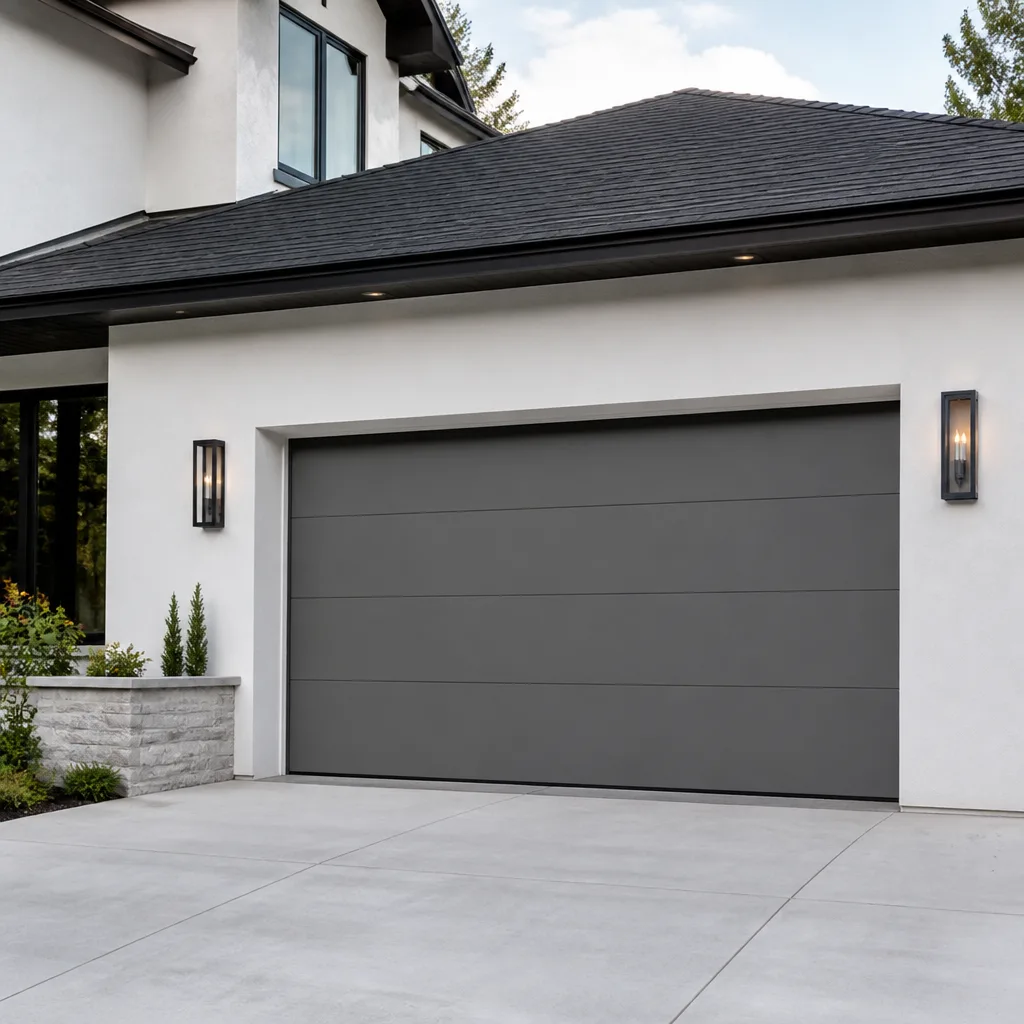 Modern flush
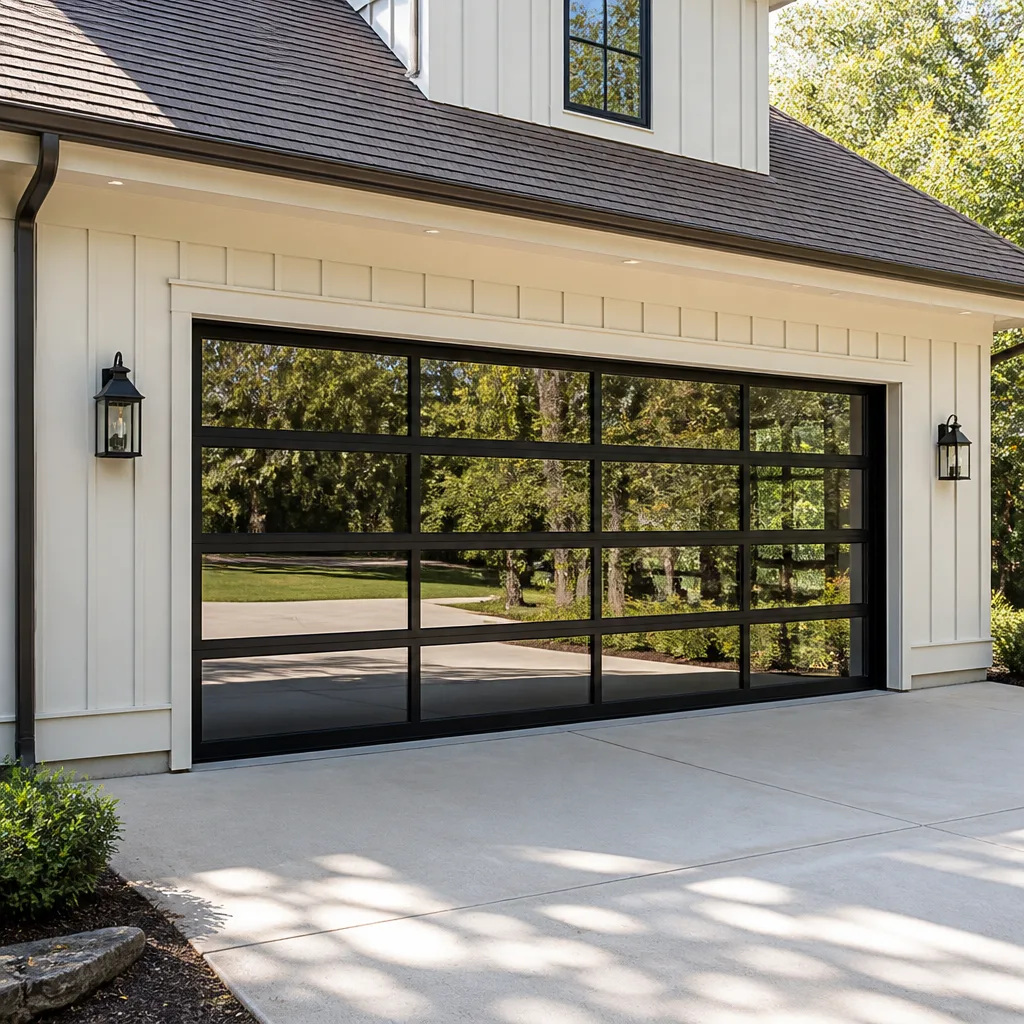 Full-view glass
 LiftMaster openers
 Chamberlain openers
Full 25-point door and opener safety check with every visit - springs, cables, rollers, tracks, and your LiftMaster or Chamberlain opener included
You get a price before we start. It does not change when the truck arrives.
Get your free estimateGarage Door Warning Signs: A Downtown San Diego Homeowner’s Reference Guide
Garage doors rarely fail without warning. The problem is that in Downtown San Diego, the warnings blend into the background noise of urban life. A grinding sound gets attributed to the trolley on Market Street. A sluggish opener gets blamed on a weak Wi-Fi signal. A slight hesitation gets dismissed as a quirk of an older Craftsman opener that’s “always done that.” By the time a cable snaps or a spring lets go, the repair bill is three times what an early catch would cost. This guide teaches you to hear what your garage door has been trying to tell you for months, and to distinguish the serious signals from the benign ones, specifically in the context of Downtown San Diego housing stock, from older Craftsman bungalows near Balboa Park to steel-and-glass loft conversions in the East Village. For more guides & resources, see our blog.
Quick Answer
The earliest reliable garage door warning signs in Downtown San Diego are a door that feels heavier when you lift it manually, a visible gap between the bottom seal and the floor on one side, rust that has progressed from orange dust to flaking at hinge pivot points, and an opener that hesitates or reverses for no apparent reason. Any one of these signals, caught early, usually means a $150-$300 repair instead of a $600-$1,200 emergency call. Ignore them and you’ll likely face a fully stalled door on a morning you can’t be late.
Table of Contents
- The Manual Lift Test: What Your Door Weighs Really Means
- Uneven Gaps at the Floor Seal: A Cable Issue Disguised as a Floor Problem
- Rust Patterns That Predict Failure vs. Cosmetic Surface Rust
- Opener Behavior Changes: What Hesitation, Reversals, and Lag Actually Point To
- Downtown San Diego Loft Conversions: Structural Panel Doors and Their Unique Failure Modes
- Sound Diagnosis: What Your Door’s Noises Are Saying
- Common Mistakes to Avoid
- When to Call a Professional
- Frequently Asked Questions
- The Bottom Line
The Manual Lift Test: What Your Door Weighs Really Means
Most homeowners never touch their garage door by hand. The opener does all the work, and that’s exactly why the earliest warning sign goes unnoticed. A torsion spring losing tension doesn’t announce itself. It changes how the door feels, gradually, over weeks or months. The manual lift test catches that change in under a minute.
Start by pulling the emergency release cord on your opener, which disengages the door from the drive system. This is the red cord dangling from the opener rail, standard on every LiftMaster, Chamberlain, Genie, and Raynor opener installed in Downtown homes. With the door disconnected, lift it by hand. A healthy door rises smoothly to about waist height, then either holds its position or drifts upward slowly. It should feel balanced, like opening a heavy window that’s been properly counterweighted.
Now comes the diagnostic part. Here’s what your door is telling you:
- Door feels noticeably heavier on one side: a spring is losing tension unevenly. On a two-spring system, one side is carrying more load than the other, and the remaining spring is working double duty. This shortens its life quickly.
- Door holds when lifted, but slams when you pull it down: the spring has lost enough tension that it no longer counterbalances the door’s weight on the way down. The door wants to fall, and the opener is working against gravity every cycle.
- Door drifts down on its own from waist height: the spring has weakened significantly. Your opener is now doing the work of both itself and the spring, which burns out the opener motor and gears prematurely.
- Door won’t stay up at all: don’t attempt to force it. The spring has failed, and the door’s full weight, often 200 to 400 pounds, is unresisted. This is a dangerous condition that can cause serious injury if the door falls.
If your door behaves in any of these ways, the spring needs professional attention. Torsion springs are under extreme tension and require specialized tools and training to service safely.
In our Downtown San Diego service area, we often see this test overlooked for years because residents park on the street or in building garages where someone else technically “manages” the door. Condo owners in buildings like those near Cortez Hill or the Marina District frequently tell us they’ve never touched their door by hand and honestly didn’t know the release cord existed. If you’ve never pulled that red cord, now is the moment to learn what your door actually weighs.
- Bottom line: Disconnect the door and lift it. A heavy or unbalanced door is a spring problem in its earliest stage, not an opener problem, and catching it now prevents a snapped cable or a shattered spring cone later.
Uneven Gaps at the Floor Seal: A Cable Issue Disguised as a Floor Problem
A daylight gap under one side of your closed garage door is easy to blame on the concrete floor. Concrete settles, the thinking goes, and Downtown San Diego’s older buildings, especially those built before the 1980s, have notoriously uneven garage slabs. But far more often, that gap signals a broken or stretching lift cable, and the two problems look identical from the outside.
The difference matters because a cable problem is an active safety hazard, while a floor issue is cosmetic. Here’s how to tell them apart without any tools:
- Look at the cable drum: Above each side of the door, attached to the shaft where the springs are mounted, sits a cable drum. The cable wraps around it. If the cable is loose, crossed, or frayed, that side of the door is not being lifted evenly, causing the gap.
- Watch the door as it opens: A door with a broken cable will rise unevenly, with one side lagging behind the other. A door on an uneven floor rises evenly and only contacts the floor unevenly when closed.
- Check the bottom seal condition: If the rubber seal is worn flat on one side but thick on the other, that’s a floor or track issue. If the seal is evenly worn but sits off the floor on one side, the door itself is cocked, which points to cables or springs.
In our market, the uneven floor explanation is especially tempting for Downtown San Diego homeowners because many garages are conversions, cut into building podiums or tucked under residential towers with floors that are genuinely not level. But the “it’s just the floor” assumption has cost some of our customers a full door replacement. By the time the gap grows wide enough to notice, the cable has often been fraying for months, and the remaining strands snap when the door is mid-cycle, dropping one side hard enough to bend the track.
If the gap appeared suddenly, within weeks, it’s almost certainly a cable. Floors settle over years, not overnight. Same-day attention isn’t required for a settled floor, but a cable showing signs of wear deserves a call before it strands you with a door that won’t open at all. For a deeper look at how cables interact with the rest of the system, our Garage Door Repair in Downtown San Diego page walks through the full line of common failure points.
Rust Patterns That Predict Failure vs. Cosmetic Surface Rust
Coastal air is a fact of life in Downtown San Diego. The marine layer pushes salt-laden moisture inland every evening, and garage doors, especially older steel doors in uninsulated parking structures, absorb that moisture at their hinge points and roller brackets. Rust happens. The question isn’t whether your door has any rust. The question is whether the rust pattern is the kind that kills doors. For a complete maintenance schedule, see our Seasonal Garage Door Care for Downtown San Diego: Year-Round Homeowner’s Guide.
Rust comes in two patterns with very different meanings:
- Cosmetic surface rust: A fine, even orange film on flat steel panels, usually starting at the bottom edge. This looks bad but rarely progresses to failure. Surface rust on the face of a Clopay or Amarr steel door can be sanded, primed, and repainted, and the door will last another decade. It’s an appearance issue, not a structural one.
- Flaking or pitting at pivot points: When rust forms at the hinge, the roller stem, or the bracket where these parts connect, it’s not sitting on the surface. It’s growing between moving parts, grinding them down every cycle. This rust pattern predicts failure within weeks to months because the rust is actively consuming the metal at the point of highest stress.
Here’s the specific progression we look for:
- Stage 1 (cosmetic): Orange dust on flat surfaces. Wipes off with a rag. No action needed beyond cleaning and sealing.
- Stage 2 (early concern): Orange discoloration at the hinge pin where the hinge folds. The door still operates quietly. Lubrication can slow this down, but inspection is wise.
- Stage 3 (predictive failure): Flaking rust at the hinge barrel or roller stem. The hinge is losing material and will begin to bind. A hinge can snap at this stage, and a snapped hinge can tear the panel or jam the door in its track.
- Stage 4 (impending failure): The hinge is visibly thinned or cracked, or the roller wheel wobbles. Replacement is overdue, and the door may stall at any point in its travel.
Downtown San Diego’s specific climate accelerates this progression. The evening marine layer condenses on metal surfaces, and salt residue from the coastal air accelerates the chemical reaction. Steel doors in East Village and the Marina District rust faster than identical doors in inland neighborhoods like North Park or Mission Valley, often showing Stage 3 rust within five to seven years if the hinges were never lubricated.
If your rust looks like Stage 3 or Stage 4, don’t wait for the snap. Hinge replacement is one of the lower-cost repairs on a garage door system, and it’s exactly the kind of problem that’s cheap today and expensive tomorrow. For questions about whether your specific door is worth repairing or replacing, our Garage Door Installation in Downtown San Diego page covers the decision framework we use with customers every week.
Opener Behavior Changes: What Hesitation, Reversals, and Lag Actually Point To
When a garage door opener starts behaving oddly, the instinct is to blame the electronics. The logic board is failing. The remote sensors are dying. The app is buggy. Sometimes that’s true. But in our experience across thousands of opener diagnoses in Downtown San Diego, the majority of “electronic” symptoms trace back to mechanical problems that the opener is trying, inefficiently, to work around.
Think of your opener as a translator. It reads resistance from the door and reacts. When the door gets heavier, the opener’s behavior changes not because the opener broke, but because it’s compensating for a door that no longer moves freely. The symptom you see, hesitation, reversal, lag, is often the opener saying something the door isn’t saying loudly enough on its own.
Here’s how to map specific opener behaviors to their most likely mechanical causes:
- Hesitation before moving, or slow initial movement: The opener’s force sensor is detecting abnormal resistance at the start of the cycle. This is often a dry or rusted roller bearing, a misaligned track, or a spring that’s lost tension and is no longer counterbalancing the door. The opener is having to push harder to get the door moving, and the hesitation is the hesitation of an electric motor straining.
- Mid-cycle reversal, where the door goes up a few inches and then comes back down: This is the opener’s safety system triggering. The photo-eye sensors at the bottom of the track see an obstruction, or the force sensor reads resistance that mimics an obstruction. But obstructions aren’t always visible objects. A broken spring or a snapped cable changes the way the door moves, and the opener interprets the sudden load change as a collision. Before replacing the logic board, check the mechanical state of the door.
- Remote lag, where the door responds slowly to the wireless signal: This is the one symptom that’s usually electronic. But not always. Remote lag in a Downtown San Diego building is often radio frequency interference from nearby cell towers, building Wi-Fi systems, or even the smart meters on the building’s electrical service. Older LiftMaster and Genie openers operating on 315 MHz or 390 MHz frequencies are more prone to interference than newer dual-frequency models.
- Door runs but sounds strained, with a low grinding or humming: The opener’s gear train is working against a door that’s too heavy, usually because a spring has lost tension. The opener motor itself is fine, but the gear teeth are being worn down by the overload. Left alone, the gear strips out, which is one of the most common preventable opener failures we see.
The takeaway is that opener symptoms deserve a mechanical check before any electronics replacement. Many Downtown San Diego homeowners have paid for a new logic board or a whole new opener when the actual problem was a $40 roller set or a $200 spring. If your opener is failing in a specific pattern, call a service that treats the opener as a system, including the door it’s connected to. Our Garage Door Opener Repair in Downtown San Diego page explains the diagnostic approach in detail.
Downtown San Diego Loft Conversions: Structural Panel Doors and Their Unique Failure Modes
Downtown San Diego has a housing stock unlike anywhere else in the county. The East Village, the Marina District, and parts of Little Italy are dense with warehouse conversions and mid-rise loft buildings from the 1990s and 2000s. These buildings often have garage doors that are not conventional overhead residential doors. They’re structural panel doors, sometimes glass, sometimes metal, designed to span wider openings and to integrate with the building’s facade rather than to sit under a standard residential track system. If you’re considering a replacement, our guide on Choosing the Right Garage Door Brand: A Buyer’s Guide for Downtown San Diego covers the options.
These doors fail differently. The standard warning-sign guide, written for a suburban two-car garage, doesn’t apply cleanly to a loft conversion where the garage door is a 12-foot glass panel on a building’s ground floor.
Here are the failure modes specific to structural panel doors in Downtown San Diego loft conversions:
- Panel delamination at the edges: Structural doors are built as laminates of glass, metal, or composite with edge seals. On coastal buildings, water intrusion at the bottom edge lifts the laminate layers apart. This looks like bubbling or fogging in a glass door, or visible layer separation in a metal door. It’s not just cosmetic in an urban environment where the door is part of the building envelope.
- Track pull-away from the building substrate: Standard residential tracks mount to wooden framing. Structural door tracks in loft buildings mount to concrete or steel. When the anchor bolts loosen from years of vibration, the track pulls away from the wall, and the door begins to ride off-angle. This is a building-structure issue, not just a door issue, and needs a technician who understands both.
- Counterweight system failure rather than spring failure: Many structural panel doors don’t use residential torsion springs. They use counterweight cables, spring packs, or hydraulic assist systems. When these fail, the door doesn’t slam the way a residential door slams. It becomes impossible to lift, or it drifts down slowly over several minutes. Homeowners sometimes mistake a drifting structural door for a normal “settling” until the door simply stops responding.
- Sensor positions that don’t match residential codes: Because structural doors are wider and often close flush with the building face, the safety sensors may be positioned differently than on a standard residential door. A door that reverses for no clear reason may have sun-interference on the sensors in a west-facing exposure, which is common in buildings along the waterfront, where afternoon sun hits the sensor line directly.
If you live in a loft conversion and your garage door doesn’t look like a standard overhead door, the diagnostic rules still apply. Lift the door manually. Look at the edges. Listen for grinding. But understand that the specific fix may require parts and expertise that a general handyman won’t have. The technicians who work on Wayne Dalton and Raynor structural products carry different parts and diagnose different failure modes than those who only see suburban Clopay doors. Make sure whoever you call has seen your kind of door before. If you’re not sure who to trust, read our guide on How to Hire a Garage Door Contractor in Downtown San Diego: A Step-by-Step Guide.
Sound Diagnosis: What Your Door’s Noises Are Saying
A garage door is a mechanical system with a limited vocabulary. It can’t send you a check-engine light, but it can make sounds, and every sound maps to a specific problem. In a Downtown San Diego environment, where street noise, sirens, and the constant hum of the city mask quieter sounds, you have to listen on purpose. Here’s a field guide to the sounds and their meanings:
- A loud bang, like a gunshot, followed by the door not moving: This is a torsion spring snapping. The spring is under extreme tension, and when it breaks, the energy releases all at once. This is not a subtle sound. If you hear a bang from your garage and the door won’t open, the spring has failed. Step away from the door and call a technician.
- A grinding or rubbing noise during operation: The door is dragging against something. Most often, this is a roller bearing that’s worn out, or the door itself is off-center in the track and rubbing against the metal. Grinding is the sound of metal on metal, and it gets worse over time, not better.
- A squeaking or squealing noise that’s been there for months: This is usually a lack of lubrication at the hinge pins or roller stems. The sound is annoying but rarely dangerous in itself. However, the same lack of lubrication that causes the squeal also accelerates wear, so a door that’s been squealing for a year is likely near a roller or hinge failure.
- A rattling sound when the door moves, especially at the bottom panel: Loose hardware, usually the track bolts or the bottom bracket, has worked its way out from years of vibration. A rattling door is a door that’s slowly loosening its own connections, and a loose bottom bracket can fail catastrophically.
- A humming sound from the opener that lasts a few seconds and then stops without moving the door: The opener motor is running but the drive system isn’t engaging, often because the gear has stripped or the chain or belt has jumped. This is the sound of an opener that’s about to stop working entirely.
Listening on purpose means opening your garage door and standing there for the full cycle, not pressing the button from your car and pulling in. Next time you’re headed out, stop and listen. The door only takes about 15 seconds to open. That’s 15 seconds of diagnostic information you’re currently ignoring. If we could offer one piece of advice that costs nothing and prevents the most expensive repairs, it would be to listen to your door once a week. Most Downtown San Diego homeowners hear the warning sounds and categorize them as city noise without ever investigating. Your door is speaking. Listen before it yells.
Common Mistakes to Avoid
- Blaming the door’s problems on the building’s foundation. Downtown San Diego buildings do settle, but door gaps and off-level operation are far more often cable or spring problems. Blaming the building delays a mechanical repair that’s overdue.
- Treating the opener as the culprit every time something electrical fails. Hesitation, reversal, and strain sounds from the opener are usually the door telling the truth through the opener’s sensors. Replacing electronics without checking the door’s mechanics wastes money.
- Ignoring rust at the hinges because the rust on the panels hasn’t caused problems. Rust on flat steel surfaces is cosmetic. Rust at pivot points is structural. The two are not the same, and treating them the same way is how a door collapses unexpectedly.
- Letting a squealing door go because the sound has blended into the background. A door that squeals is a door that’s wearing out at its joints. The squeal isn’t just annoying, it’s a countdown timer, and when it stops, it’s often because the joint has seized and started tearing instead.
- Waiting until the door won’t open to call for service. By the time a door stalls completely, the failure has cascaded. A broken spring leads to a stripped opener gear, which leads to a bent track, and a $200 spring repair becomes an $800 multi-part repair. The early warnings were there for weeks or months.
- Using the wrong lubricant on the door’s moving parts. WD-40 is not a garage door lubricant. It’s a solvent that briefly quiets a squeal while stripping the remaining grease. The correct product is a silicone or lithium-based spray made specifically for garage door hardware. Using the wrong product accelerates the wear it was meant to prevent.
When to Call a Professional
Some warning signs are informational, and some are actionable. If your door feels heavy when you lift it manually, call. If you see flaking rust at the hinge points, call. If the opener is hesitating or reversing when you know the sensors are clear, call. If you hear a grinding sound you can’t locate, call. None of these signals will improve on their own, and all of them get more expensive the longer they wait. Springs, cables, and structural door components are under extreme tension and genuinely dangerous to work on without training and proper tools. A failed spring doesn’t give you a second chance if you’re in the wrong place when it lets go.
Willow Garage Door Repair offers free estimates in Downtown San Diego. Call (866) 321-6057 and describe what you’re seeing, hearing, or feeling from your door. We’ll help you figure out whether it’s a today problem or a this-month problem, and we’ll quote the work before anything starts.
Frequently Asked Questions
A garage door spring that’s losing tension makes the door feel heavier when you lift it by hand. Disconnect the opener with the red release cord and lift the door manually. If it’s hard to lift, heavy on one side, or won’t stay up at waist height, the spring is weakening. Springs don’t recover. They fail progressively, and they typically snap within a few weeks to a few months of the first noticeable heaviness. Call (866) 321-6057 if the manual lift feels wrong.
An uneven gap at the bottom, where one side of the door touches the floor and the other side leaves daylight, usually means a broken or stretching lift cable, not a settled floor. Look at the cable drums above the door. If a cable is loose or frayed, that side can’t lift evenly, and the door cocks. A floor issue develops over years. A cable issue appears suddenly. If the gap is new, call for inspection before the cable lets go completely.
Rust that matters forms at moving joints: hinge pins, roller stems, and brackets. It flakes, pits, and grinds down the metal every time the door cycles. Rust that’s just ugly forms on flat panel surfaces, where it’s a paint problem, not a structural one. Surface rust doesn’t predict failure. Flaking rust at a hinge predicts that the hinge will snap, usually within a few months if not addressed.
A hesitation before movement usually means the opener’s force sensor is detecting resistance from a door that’s too heavy, often because a spring has lost tension or a roller is seized. The opener isn’t necessarily dying, but if it keeps straining against a heavy door, it will eventually strip the gear. Treat the hesitation as a door problem first, not an electronics problem, and have the mechanical system checked before replacing the opener.
Yes, the marine layer and salt air in Downtown San Diego accelerate rust at any exposed metal joint, especially on older steel doors in uninsulated parking structures. Hinge and roller rust that might take 10 years inland can appear in 5 to 7 years near the coast. The failure pattern is the same, but the timeline shortens. Regular lubrication and an annual inspection do more to extend a door’s life in a coastal environment than anywhere else.
A loud bang from the garage, like a firecracker or a hammer hitting metal, is almost always a torsion spring snapping. The door will not open, and the spring’s stored energy has just released. Don’t try to force the door open or re-engage the opener. The remaining components are under unpredictable tension. Call a technician. Willow Garage Door Repair responds to spring failures in Downtown San Diego, call (866) 321-6057 and we’ll dispatch a technician as soon as possible.
The Bottom Line
Your garage door has been telling you things, and the only reason you haven’t heard is that the city is loud, the opener is automatic, and the warnings are subtle enough to ignore until the escalating cost forces attention. Lift the door by hand once this week and feel what it weighs. Look at the gap under the closed door and see whether it’s new. Check the hinges for flaking rust. Listen to one full open-and-close cycle without checking your phone. Thirty seconds of attention now beats a stalled door and a four-figure repair later. Downtown San Diego’s coastal air, converted buildings, and street noise create the perfect conditions for ignored warning signs to become expensive emergencies. The fix is awareness, and now you have the reference guide. If anything in this guide raises a flag about your door, call (866) 321-6057 for a free estimate, or start with our home page to see the full range of what we service.
Written by the team at Willow Garage Door Repair, serving Downtown San Diego since 2013.
Styles & brands we work with
- Raised-panel steel
- Carriage house
- Modern flush
- Full-view glass
- LiftMaster openers
- Chamberlain openers
See the difference
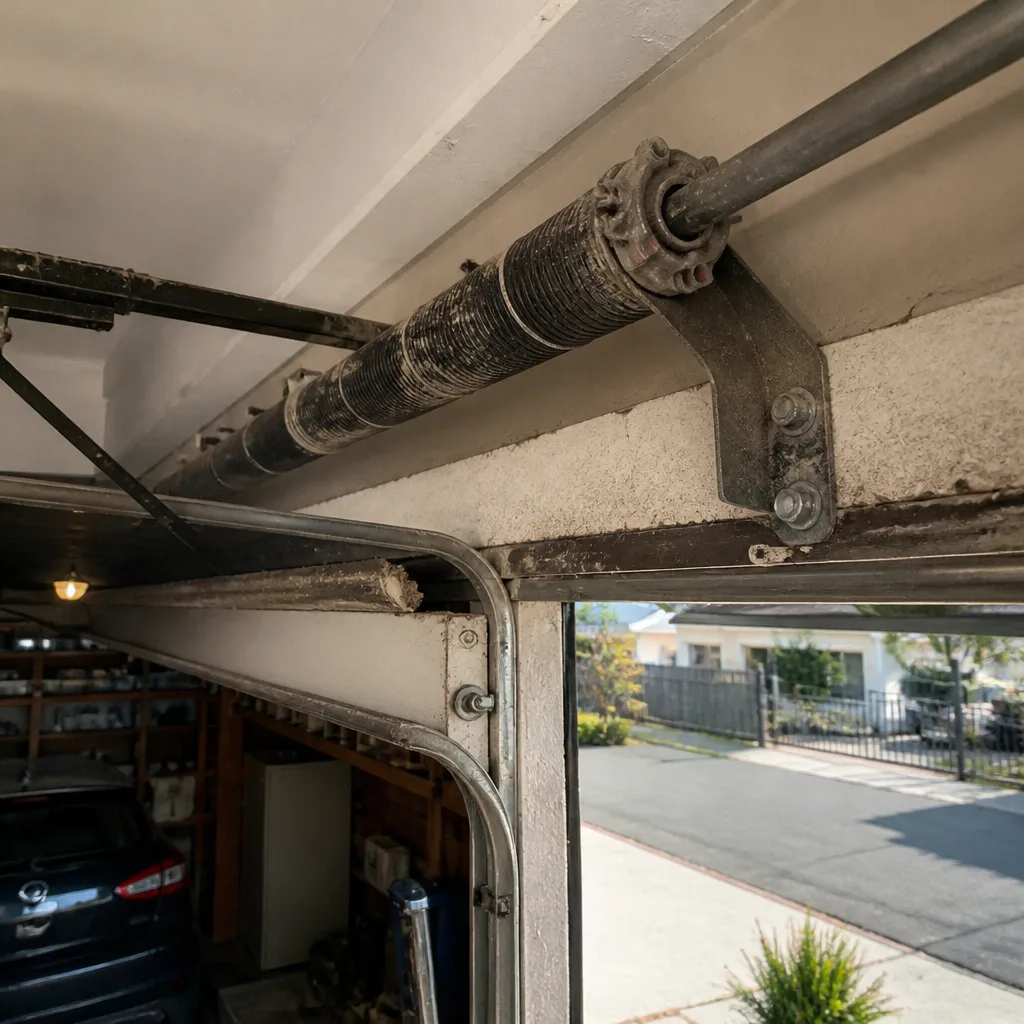 Before
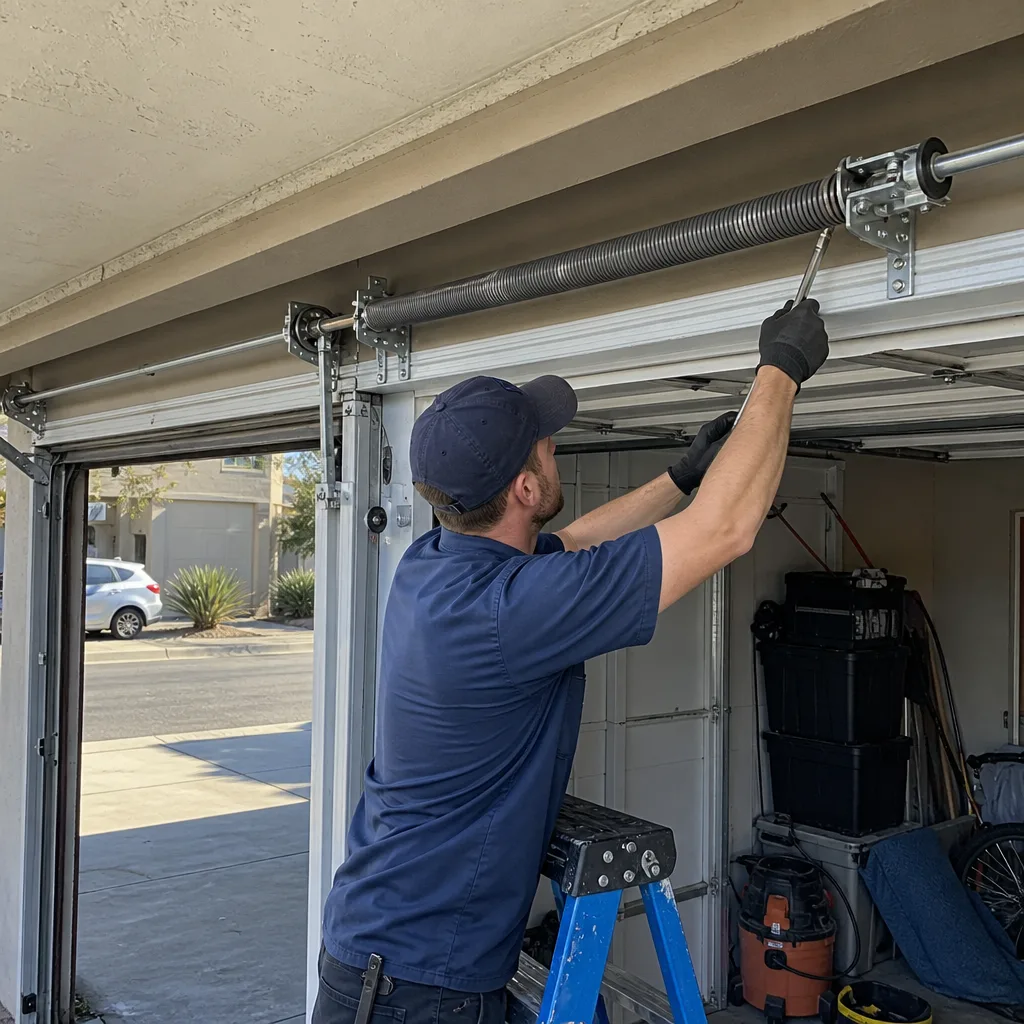 After
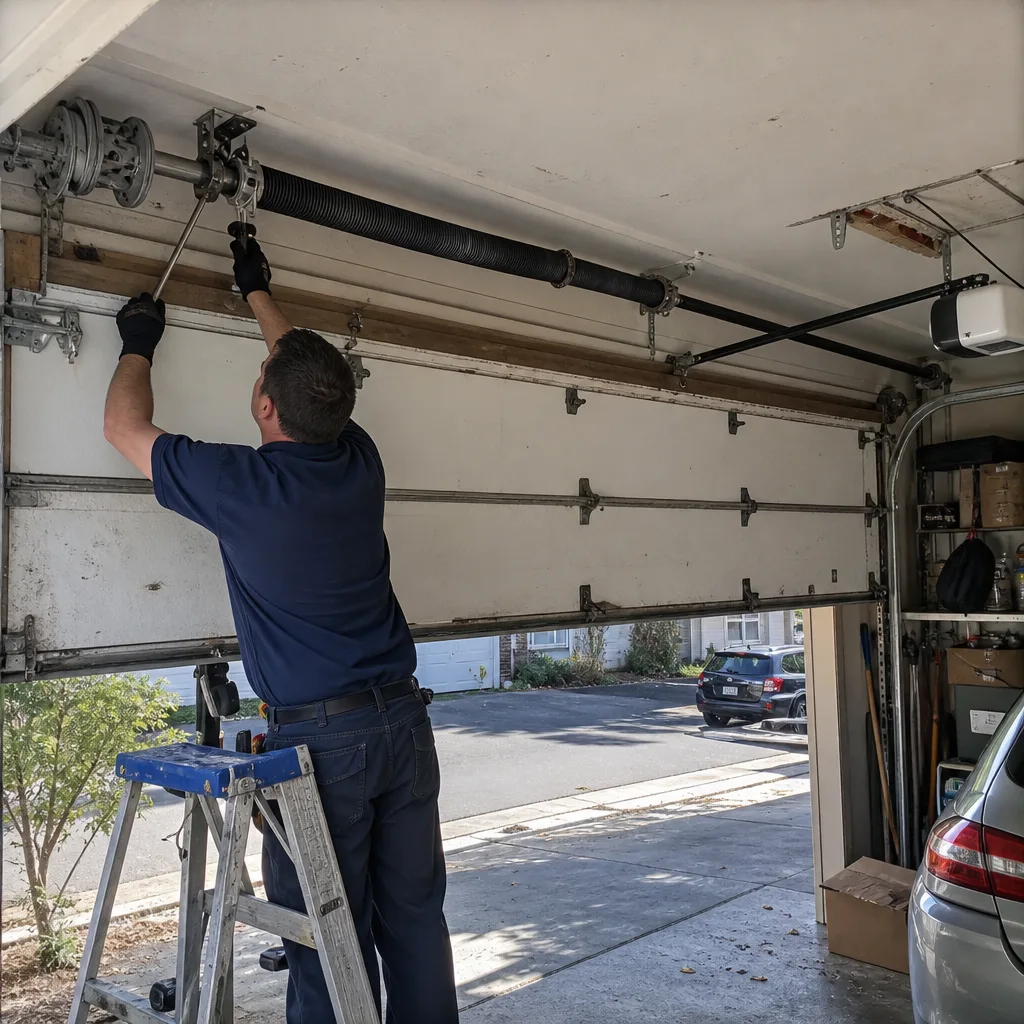 Before
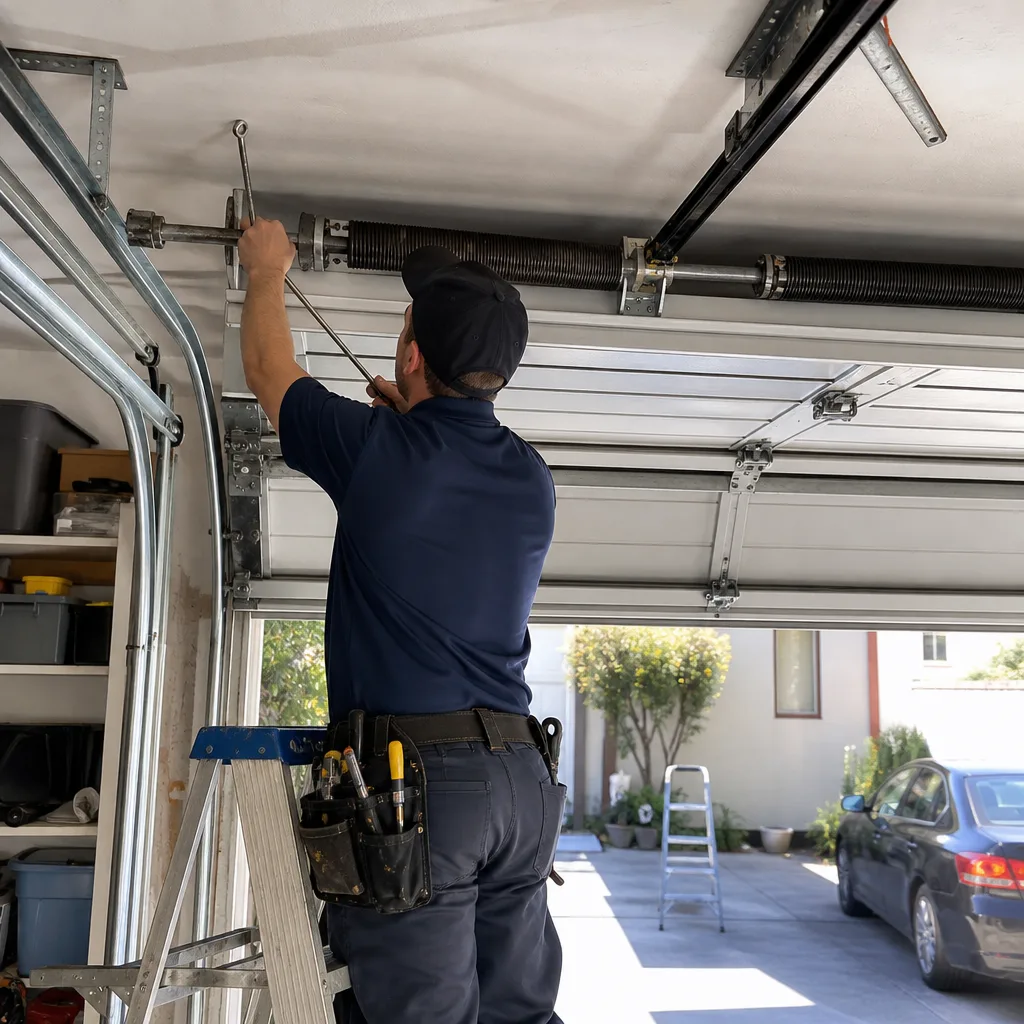 After
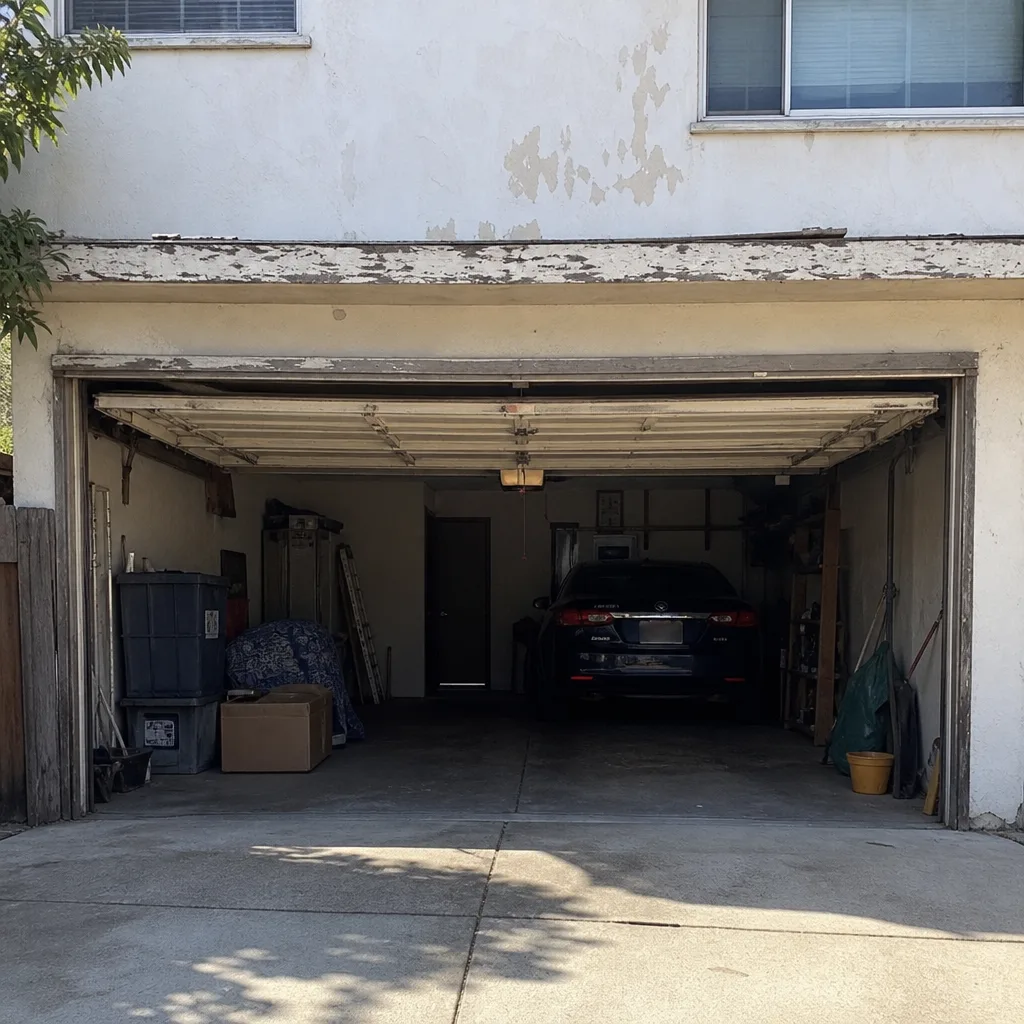 Before
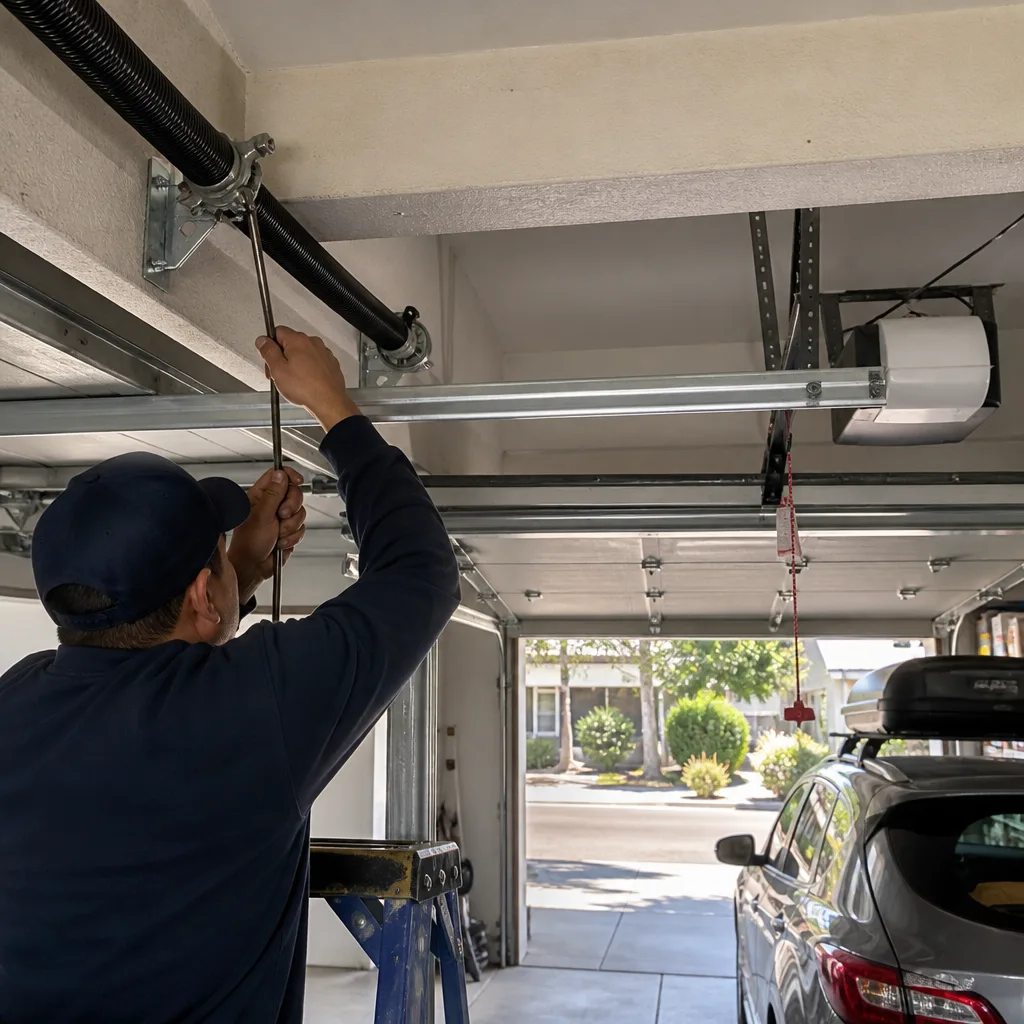 After