
Last updated November 3, 2026
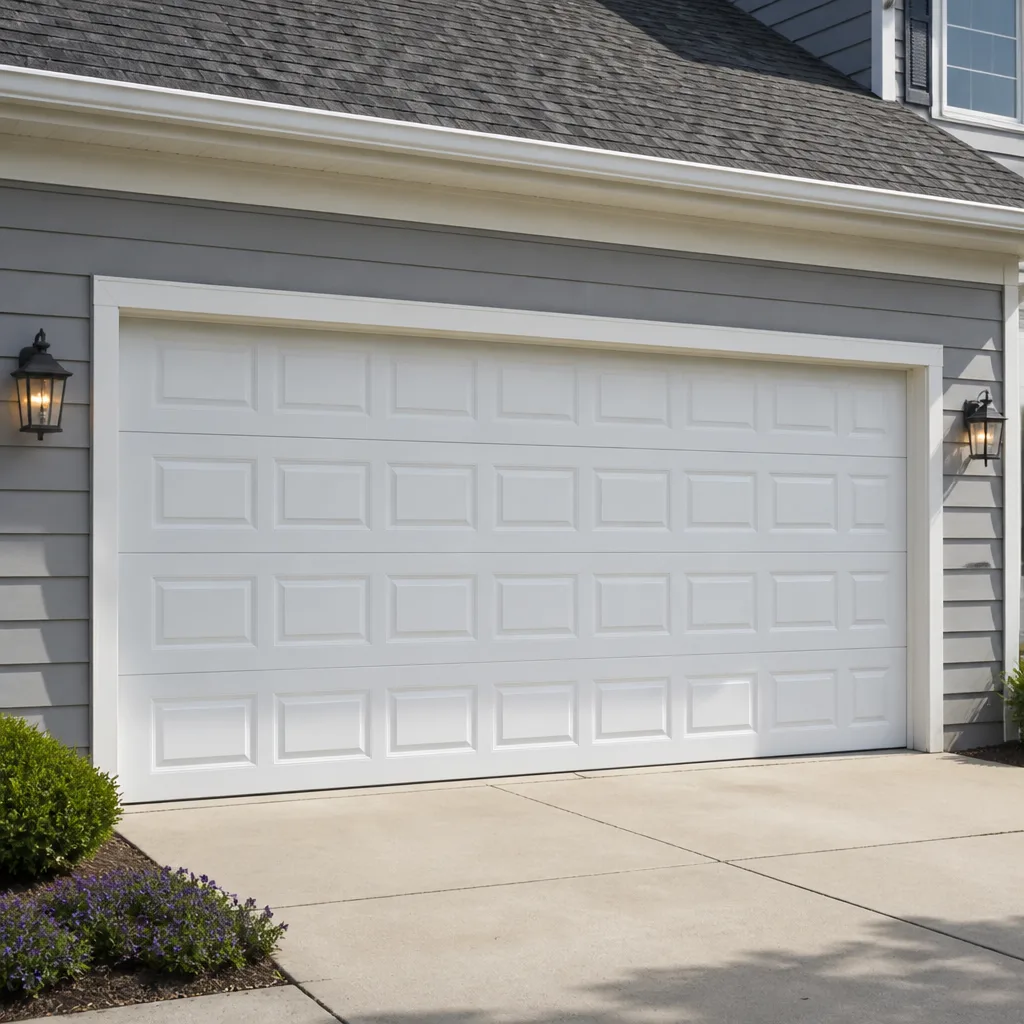 Raised-panel steel
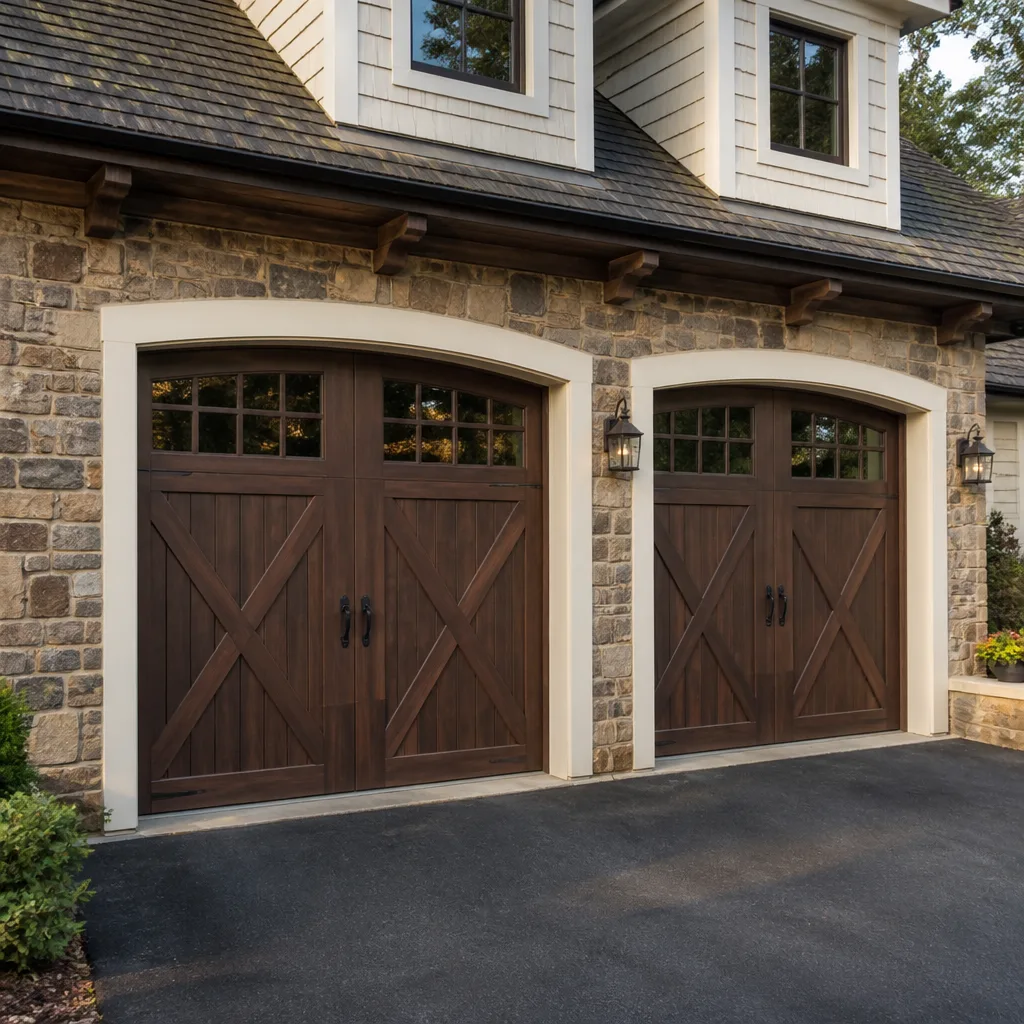 Carriage house
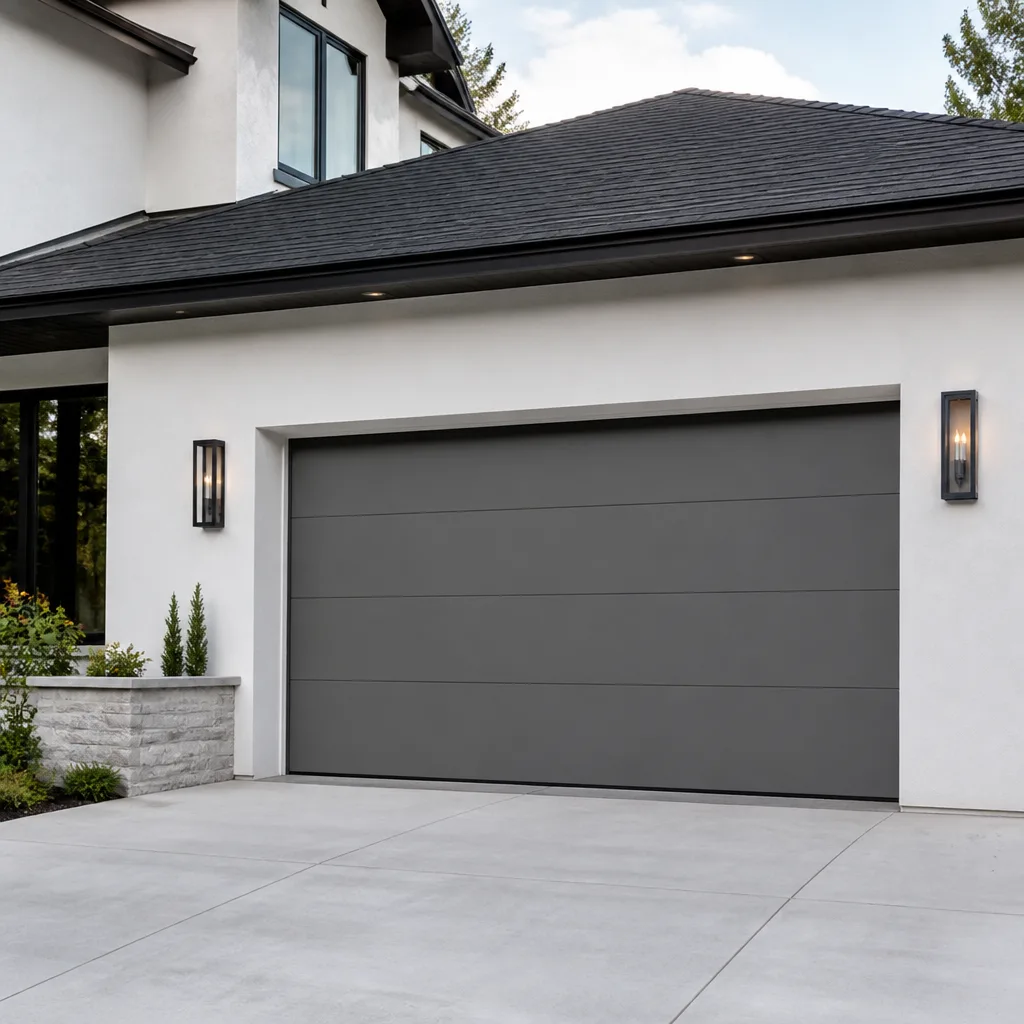 Modern flush
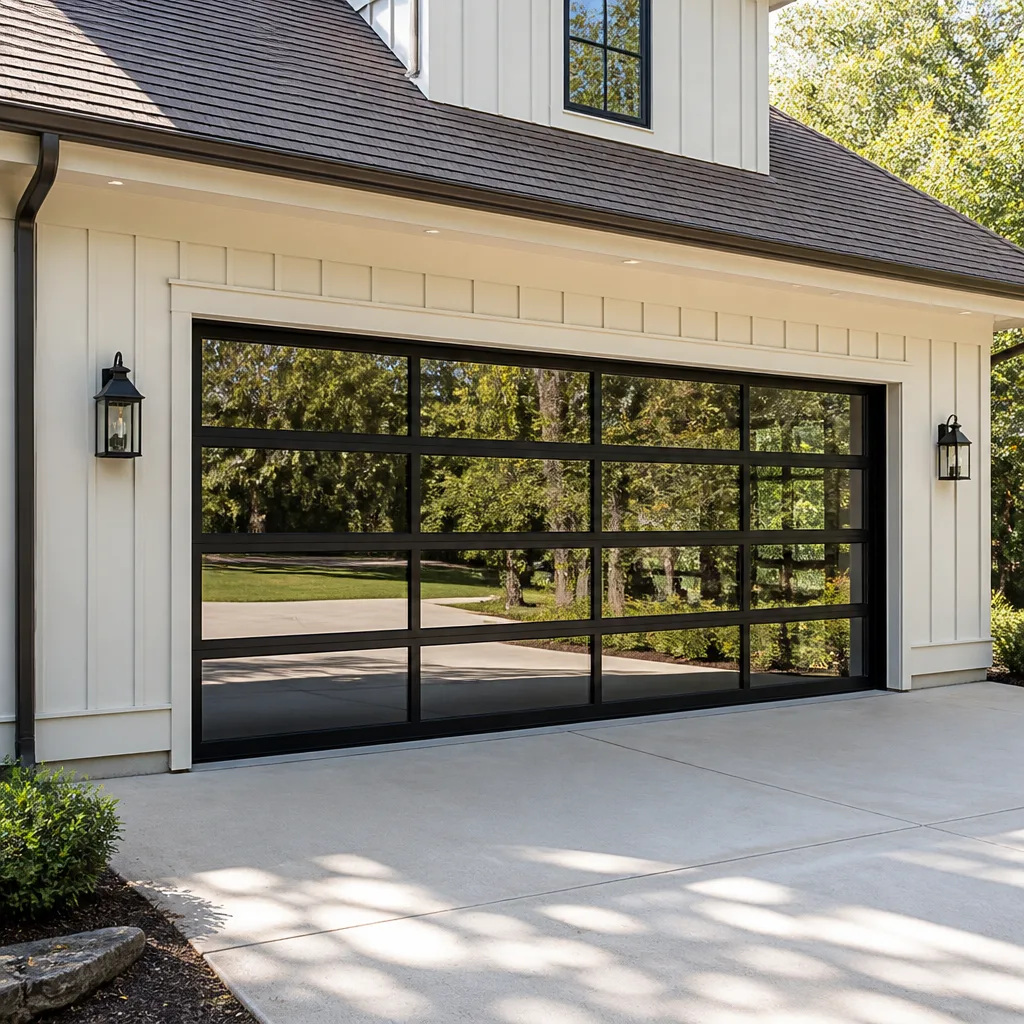 Full-view glass
 LiftMaster openers
 Chamberlain openers
Full 25-point door and opener safety check with every visit - springs, cables, rollers, tracks, and your LiftMaster or Chamberlain opener included
You get a price before we start. It does not change when the truck arrives.
Get your free estimateThe Complete Garage Door Repair Guide for Downtown San Diego Homeowners
Most garage door guides are written for a suburban ranch house in Phoenix. If your garage opens onto a Downtown San Diego alley, shares a wall with a neighbor, or sits two miles from the bay, the failure patterns, and the fixes, are different. Salt air chews through hardware faster. Below-grade garages trap moisture. HOA covenants dictate what you can even install. This guide – along with our The Complete Guide to Garage Door in Downtown San Diego – is built around the physical reality of Downtown San Diego garages: what actually breaks, why it breaks sooner here, and how to get it fixed without wasting money on parts you don’t need. We’ll cover spring failures, opener electronics, corrosion patterns, permit questions, and brand-specific quirks for the systems most common in the urban core.
Quick Answer
Garage door repair in Downtown San Diego almost always involves one of five failures: broken torsion springs, snapped cables, misaligned or corroded tracks, failed opener logic boards, or sensor faults from vibration and moisture. Most Garage Door Repair calls for springs and cables are done the same day. Opener diagnosis takes 30 to 45 minutes, and because salt air accelerates corrosion on coastal hardware, Downtown San Diego homeowners should expect spring and track servicing about 20 to 30 percent sooner than inland properties.
Styles & brands we work with
- Raised-panel steel
- Carriage house
- Modern flush
- Full-view glass
- LiftMaster openers
- Chamberlain openers
Table of Contents
- What Actually Breaks on Downtown San Diego Garage Doors
- Why Salt Air Changes the Repair Math
- Alley-Access and Below-Grade Garages: What’s Different
- Repair Costs in Downtown San Diego: An Honest Breakdown
- Opener Brands in Downtown Buildings: LiftMaster, Chamberlain, and Genie Quirks
- HOA Rules and City Permits: What You’re Actually Responsible For
- The Service Lifecycle: Inspection, Repair, Replacement
- Common Mistakes to Avoid
What Actually Breaks on Downtown San Diego Garage Doors
In our experience working on garages across Downtown San Diego, from Cortez Hill to the Marina District, the failure pattern is remarkably consistent. It starts with a noise. Then a hesitation. Then a full stop. What’s behind that stop is almost always one of these five components.
Torsion Springs
The torsion spring is the counterweight system mounted above the door opening. It carries the full weight of the door through every cycle. Steel springs are rated for a certain number of cycles, usually 10,000 on standard residential doors. In Downtown San Diego’s marine air, the uncoated spring on an older door corrodes at a measurably faster rate. Pitting from salt exposure creates stress points. When a spring snaps, it sounds like a gunshot in an enclosed garage, and the door becomes impossible to lift manually. This is a safety-critical component: the stored energy in a wound torsion spring is enough to cause serious injury. Never attempt to adjust or remove one without a trained technician and the right winding bars.
Steel Cables
Cables run along both sides of the door and transfer spring tension to the door itself. On the coast, cable failure usually starts where the cable meets the drum or where it passes through a worn pulley. Fraying is visible if you look closely, but most Downtown San Diego homeowners don’t, because the cable routing on alley-access doors is often hidden against a side wall or in a recessed track. A snapped cable leaves the door cocked at an angle, grinding against the track. That grinding bends the track, which turns a $200 cable job into a $600 track replacement. Catching frayed cables early is one of the cheapest insurance policies on a coastal garage.
Track Misalignment and Corrosion
Tracks on Downtown San Diego garages face two enemies: corrosion from humidity, and physical contact from vehicles squeezing into tight spaces. Many downtown condos have parking spots narrower than today’s SUVs. A door that gets bumped by a car fender or a bike rack develops a track gap. The rollers drag, the door slows, and eventually it binds. Salt corrosion speeds this up because the track metal loses its smooth surface finish. A roughened track wears rollers down faster, which causes more drag, which flexes the track more. It’s a feedback loop.
Opener Drive Gears and Logic Boards
Opener failure in the urban core is less about age and more about environment. Heat accumulates in enclosed garage spaces. Vibration from the building itself, from vehicle traffic, and from the door’s own operation shakes solder joints loose over years. The most common opener failures we see in Downtown San Diego are stripped drive gears on chain-drive units, worn belts on belt-drive units, and failed logic boards that stop responding to remotes or wall panels. The logic board is the brain: it processes photo eye input, limit settings, and remote signals. When it dies, the opener can be electrically alive and mechanically dead at the same time.
Photo Eye Sensors
The photo eyes at the base of the door track send an infrared beam across the opening. If the beam is blocked or misaligned, the door refuses to close, which is a safety feature working correctly. But in tight downtown garages, sensors get bumped by bins, bicycles, and parked cars. Their mounting brackets loosen. Dust and salt residue accumulate on the lens. A door that reverses for no apparent reason is usually a sensor issue, and it’s often fixable with cleaning and realignment rather than replacement.
Why Salt Air Changes the Repair Math
If you live in Downtown San Diego, your garage door is aging faster than an identical door in El Cajon or La Mesa. That’s not opinion, it’s metallurgy. Marine aerosol carries chloride ions that deposit on metal surfaces. When humidity rises above about 60 percent, which it does routinely in the downtown microclimate, those chlorides interact with surface moisture to form a conductive film. The result is accelerated oxidation.
What this means for your door:
- Springs: Uncoated or oil-tempered springs rust and pit faster. Pitting creates microscopic stress risers. A spring that would last 10,000 cycles inland might fail at 7,000 to 8,000 cycles two miles from the bay.
- Cables: Galvanized cables resist corrosion well, but the end connections where the cable meets the drum are often the weak point. Once the galvanization wears through at a friction point, pitting follows quickly.
- Rollers and hinges: Steel rollers in the urban core rust at the bearing seats, which increases rolling resistance and accelerates opener wear. Nylon rollers with sealed ball bearings are the practical upgrade for coastal garages.
- Track hardware: The lag bolts holding the track to the wall corrode inside the wall cavity. This is a hidden failure: the door feels loose, and the track can pull away from the jamb under load.
What can you actually do about it? The honest answer is: slow it down, not stop it. Garage door components are consumable. A semiannual visual inspection catches pitting on springs before they snap, fraying on cables before they break, and rust at track mounts before the bolt heads fail. We service doors all over the urban core, and the coastal pattern is consistent enough that we recommend inspection every six months for any garage within three miles of the water. For deeper context on when to call in help, see our DIY vs Professional Garage Door: The Downtown San Diego Homeowner’s Decision Guide. That’s not an upsell, it’s a triage schedule based on what the environment does to the hardware.
Alley-Access and Below-Grade Garages: What’s Different
Downtown San Diego’s residential stock is not suburban. Many condo buildings put parking below grade. Many historic properties and some townhome developments use alley-access garages. Both conditions change how a door fails and how a technician works on it.
Below-Grade Garages
Below-grade parking areas in buildings throughout the Gaslamp, East Village, and Cortez Hill trap heavier air. Moisture condenses on metal surfaces because the concrete walls and floors stay cool. The result is constant high humidity even on dry San Diego days. This affects the door’s balance system: the spring rate is calculated based on door weight, and moisture absorption by unsealed wood doors or rust accumulation on steel doors changes that weight over time. A door that was perfectly balanced at installation can be 15 to 20 pounds heavier five years later. The opener works harder. The spring cycle life shortens. The fix is a rebalance plus corrosion mitigation on the hardware, not just a stronger opener.
Alley-Access Garages
Alley-access garages have a different failure signature. The door typically opens onto a narrow lane with limited clearance. Refuse trucks, delivery vehicles, and neighbors’ cars all pass close. Physical contact with the door face is more common than on a front-facing suburban garage. Dented panels bind in the track. Door sections flex, which stresses the hinges. The bottom seal wears from debris and standing water in poorly drained alleys. Technicians in these spaces are also dealing with overhead clearance issues, recessed housings, and occasionally doors that haven’t been serviced in a decade because accessing them requires booking the alley or coordinating with building management.
For these properties, the relevant repair categories shift. Panel realignment and track straightening come up more often. Bottom seal replacement matters more. And the diagnosis often starts with “what hit this door and when” rather than a simple component check.
Repair Costs in Downtown San Diego: An Honest Breakdown
Here’s what we can tell you without seeing your door, and what we can’t. The numbers below reflect the Downtown San Diego market specifically. They are ranges, not quotes, but they’ll show you where the money actually goes and why.
- Torsion spring replacement (single spring): $180 to $280, including parts and labor. A full spring system replacement, which we recommend when both springs are the same age and one has failed, runs $280 to $420 total. The pricing depends on spring size, door weight, and access constraints.
- Cable replacement (single cable): $120 to $180. Replacing both cables together, which is the sensible approach on a coastal door, runs $180 to $260. If the drum is also scored or corroded, add $60 to $90.
- Track realignment and roller replacement: $140 to $240 depending on how many rollers and whether the track is bent or just knocked out of alignment. A bent track section adds significantly more.
- Opener repair (gear, belt, or logic board): $150 to $350 depending on the part and the opener brand. A replacement logic board for a premium opener sits at the top of that range.
- Full opener replacement: $450 to $850 installed, depending on drive type, horsepower, and whether you add smart features. A new belt-drive opener with battery backup runs at the upper end.
- Complete door replacement: $1,200 to $3,500 for a standard single-car door in the Downtown San Diego market, depending on material, insulation, window options, and whether HOA design review requires specific finishes. Custom work on historic buildings can run higher.
These numbers are quoted and agreed before any work starts. The price we give you over the phone or at the door is the price on the invoice, unless we open the door and find something genuinely different from what was described. If that happens, we stop, show you the issue, and get a new agreement before proceeding. No surprises.
For a specific quote on your door, the Garage Door Repair in Downtown San Diego page walks through what a service call includes.
Opener Brands in Downtown Buildings: LiftMaster, Chamberlain, and Genie Quirks
Openers are not interchangeable boxes. Each brand has failure patterns, and each has interoperability details. We service garage door openers from LiftMaster, Chamberlain, Genie, Clopay, Amarr, Wayne Dalton, Craftsman, and Raynor on a regular basis, which means we’re not guessing when we walk into your garage. Here’s what we see on the three most common brands in Downtown San Diego buildings specifically.
LiftMaster
LiftMaster is Chamberlain’s professional-install line, and it’s the most common opener brand in downtown condo buildings because it’s what commercial and multifamily installers spec. In our experience, LiftMaster units age well on the mechanical side. The DC motors are reliable. The failure pattern is electronic: the travel module loses its calibration, the wall console goes dead, or the logic board stops recognizing remotes after a power surge. Downtown buildings with frequent power flickers or generator tests see this more than single-family homes. The repair is usually a board swap or a reprogramming cycle, not an opener replacement.
Chamberlain
Chamberlain is the consumer line, and you’ll find it in owner-occupied units and smaller townhomes. The gear-and-sprocket assembly on older chain-drive Chamberlain units is a known wear item. When it strips, the motor runs but the chain doesn’t move. The sound is a whirring followed by a grinding. In coastal air, the chain itself can also rust if it wasn’t factory-coated or was scratched during a previous repair. Belt-drive Chamberlain units don’t have the gear issue but can develop belt slippage if the tensioner wasn’t set correctly at installation.
Genie
Genie’s screw-drive openers, particularly the older models that are still running in a surprising number of downtown garages, have a specific failure: the carriage wears. The screw itself is usually fine, but the carriage that rides on it is a sacrificial plastic part. It strips, the door stops moving smoothly, and the first symptom is often a jerky travel rather than a full stop. Genie’s newer belt-drive units have a different issue: the photo eye system is sensitive to low voltage, and in older downtown buildings with marginal power, they can false-trigger a reversal. The fix is usually a capacitor or sensor alignment, not a full replacement.
Whatever brand is on your garage, we know it. If the opener itself is beyond repair, the Garage Door Opener Repair in Downtown San Diego page covers what replacement options actually make sense for your setup.
HOA Rules and City Permits: What You’re Actually Responsible For
This is the section generic guides skip, because most garage door companies don’t work in HOAs every week. In Downtown San Diego, a significant portion of residential garages are in condominium buildings with covenants, conditions, and restrictions. The rules matter, and they’re not the same as city rules.
HOA Requirements
Most downtown HOAs regulate the exterior appearance of garage doors. That means if you’re replacing a door, not just repairing the spring, you typically need design committee approval first. The approved finishes list is often specific: certain colors, certain panel profiles, certain window patterns. Some buildings require the door to match the original manufacturer’s style, which matters if the original door was discontinued. A brand-agnostic approach helps here, because the right door might come from Amarr, Clopay, Raynor, Wayne Dalton, or another manufacturer depending on the approved spec.
If you’re doing a repair, not a replacement, HOA approval is usually not required. A spring replacement, cable swap, or opener repair doesn’t change the exterior appearance. But if the door face is dented and the repair involves new panels, check your governing documents before the work starts. Some HOAs require any visible panel change to match the existing door’s fade, not just the original color. Sun-faded doors in the Downtown San Diego climate are common, and a fresh panel next to a five-year-old panel is visible from the street.
City of San Diego Permits
For most garage door repairs, no city permit is required. Replacing a spring, cable, roller, track section, or opener is classified as maintenance or minor repair. A full door replacement in a single-family home also typically doesn’t require a building permit if you’re replacing like for like and not changing the rough opening.
Where a permit might come into play: if you’re converting a garage to living space, changing the structural opening, or adding a new garage door where there wasn’t one. Those projects require structural review. If you’re in a historic district, which includes parts of the Gaslamp Quarter and some adjacent neighborhoods, additional design review may apply through the City’s Historical Resources Board or your specific district’s overlay rules. The technician can’t resolve those questions for you, but a good one will flag when your project might need city involvement before work begins.
If the door is beyond repair and the project is a full replacement, the Garage Door Installation in Downtown San Diego page walks through what a downtown installation actually involves.
The Service Lifecycle: Inspection, Repair, Replacement
Downtown San Diego’s residential buildings fall into three rough age bands, and the age of your building predicts what your door needs next.
Buildings from 2000 to Present
These are the newer condo and mixed-use developments concentrated in East Village, the Ballpark District, and parts of Little Italy. Doors are typically 10 to 20 years old. The original springs are reaching the end of their cycle life. The first opener units are showing logic board failures. Track hardware is usually sound, but coastal corrosion has begun on unprotected steel. The right intervention at this stage is a full hardware inspection and proactive spring replacement, not a new door.
Buildings from 1980 to 2000
This band includes a lot of the downtown condo stock built during the downtown redevelopment era. Doors here are 25 to 45 years old. The original doors, if still in place, are typically uninsulated steel or wood with outdated hardware. The sensible move is usually a swap to an insulated steel door with modern hardware, unless the HOA design guidelines restrict replacement. Openers from this era are usually worth replacing rather than repairing when they fail, because the safety features on modern units are significantly better.
Buildings from Before 1980
These are the historic buildings in the Gaslamp, Cortez Hill, and around Bankers Hill where garages were often added later or built as carriage houses. Door openings are frequently non-standard sizes. Hardware may be a mix of original and improvised parts. Repairs here require more creativity because standard off-the-shelf replacement parts don’t always fit. The right approach is usually a custom spring calculation, not a universal spring kit.
For a full written guide to what a repair visit actually involves, the Willow Garage Door Repair home page has the service details.
Common Mistakes to Avoid
- Ignoring a noisy door until it stops. A garage door that grinds, pops, or shudders is telling you something. In Downtown San Diego’s salt air, the window between “noisy” and “failed” is shorter than inland. A $180 spring replacement in month three is cheaper than a $600 track and cable repair in month six.
- Using WD-40 on everything. WD-40 is a solvent and water displacer, not a proper lubricant for garage door rollers, hinges, or springs. It strips the existing lubrication and leaves metal more exposed to coastal moisture. A lithium-based grease for metal-on-metal contact and a silicone spray for nylon parts is the right approach.
- Replacing the opener when the door is the problem. If the door is hard to lift manually, the balance system needs attention. A new opener will just burn itself out fighting an unbalanced door. Check the balance first, then the opener.
- Buying universal springs online. Springs are sized by door weight, door height, cable drum type, and track radius. The wrong spring either won’t balance the door or will cycle out prematurely. In a below-grade downtown garage where moisture adds door weight, a wrong calculation is even more likely to fail.
- Putting off HOA approval for a visible change. Replacing a door without design review in a strict building can mean redoing it at your own cost. The HOA process in Downtown San Diego buildings ranges from a week to a month. Get approval before you order the door.
- Forgetting the building’s electrical reality. Older downtown buildings have older wiring. A new opener with battery backup and smart features draws more at startup than a 1995 chain-drive unit. If your garage circuit is shared with other equipment, an opener with lower startup draw or a dedicated circuit evaluation is worth discussing before replacement.
- Waiting for a full failure to call. Sympathetic failure is real: a broken spring strains the opener. A worn cable strains the spring. A misaligned track wears the rollers. By the time the door won’t move, several components may need attention. Calling at the first sign of trouble is cheaper than calling at the point of failure.
See the difference
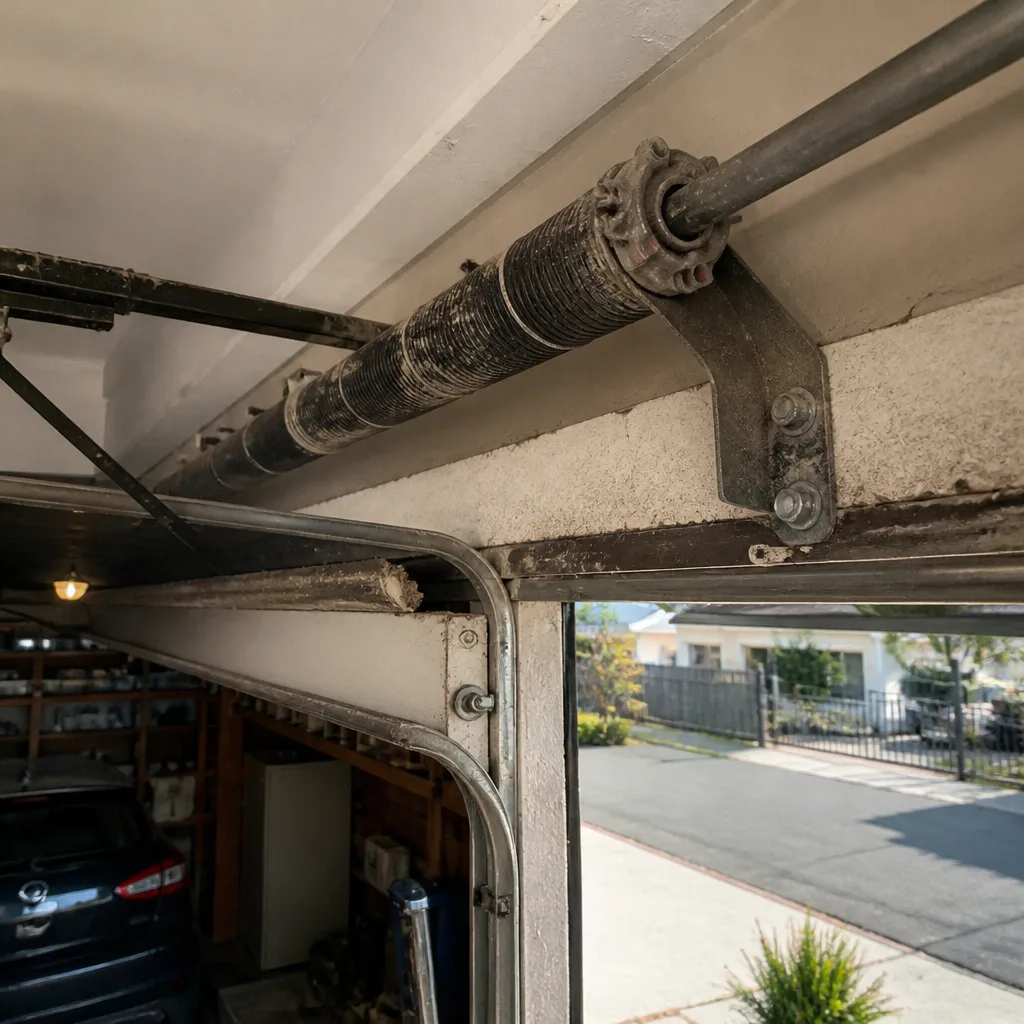 Before
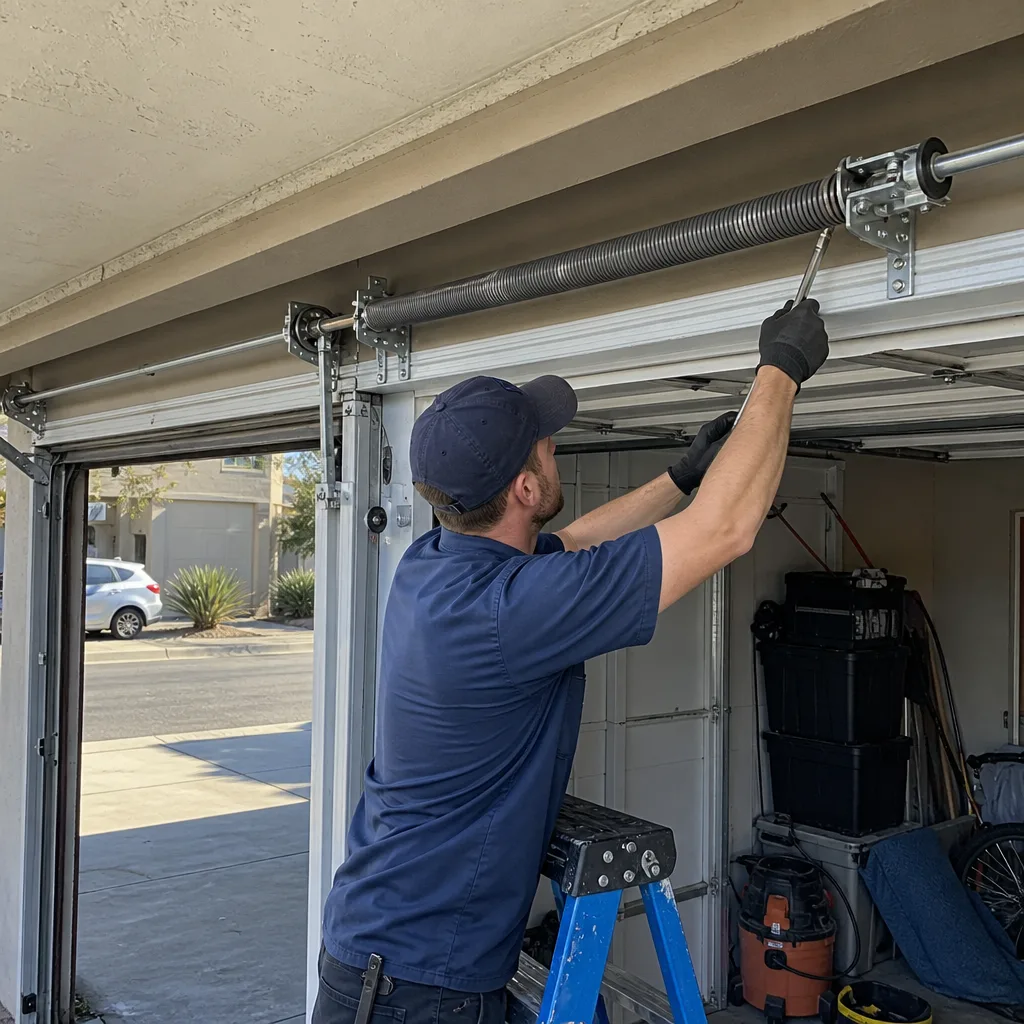 After
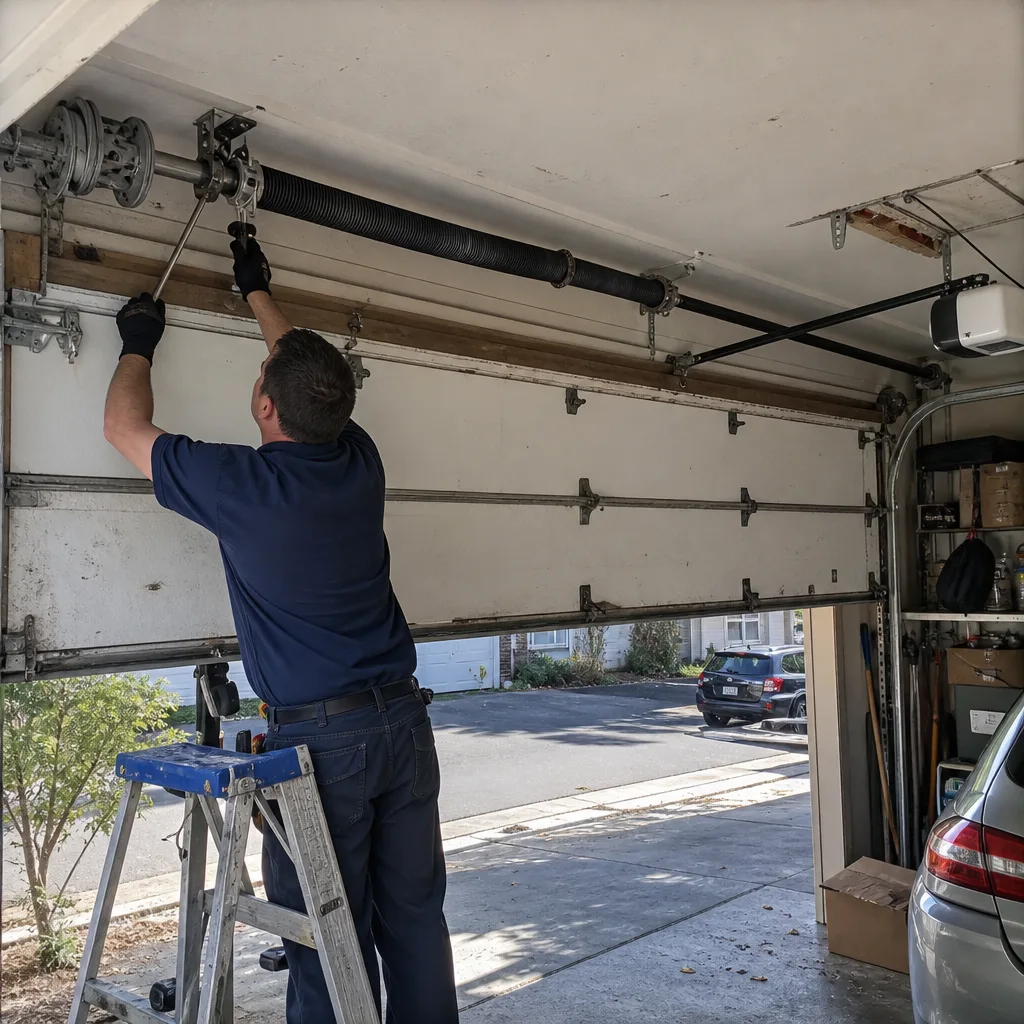 Before
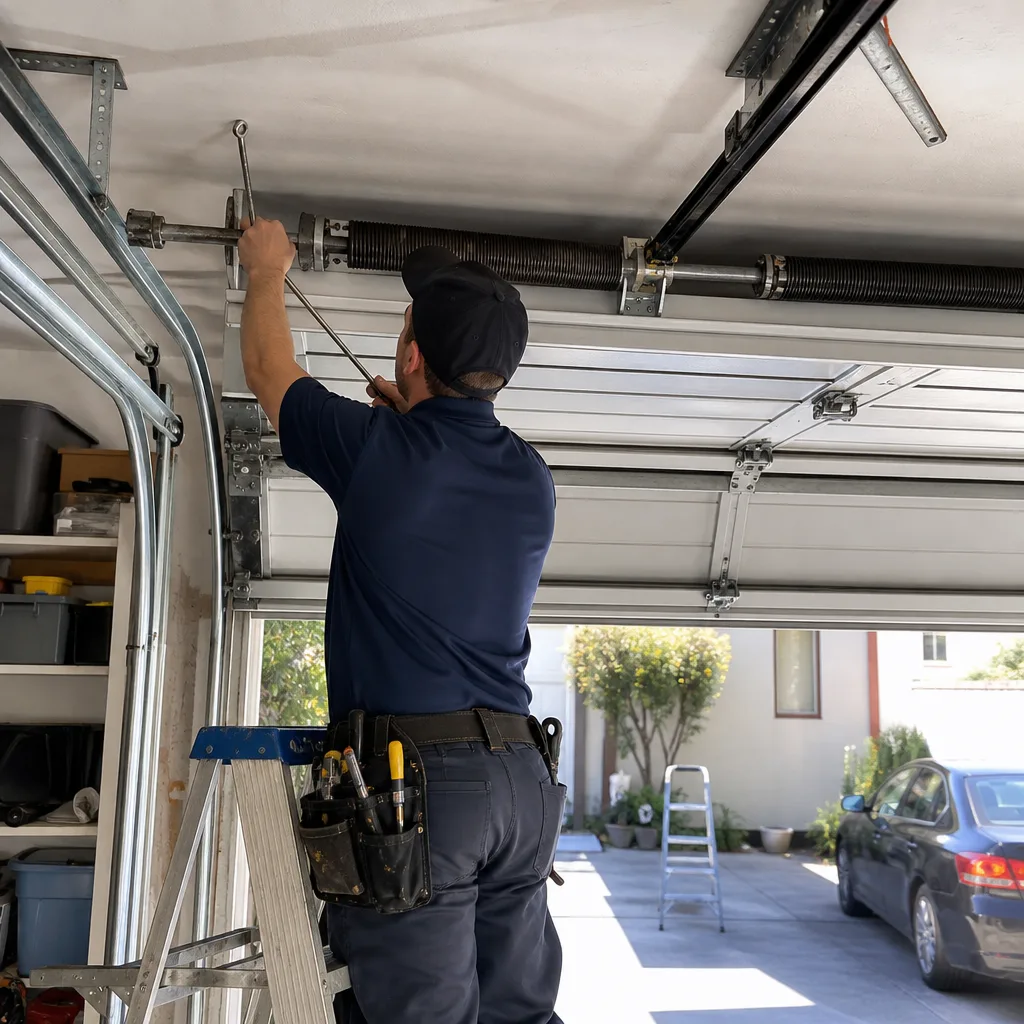 After
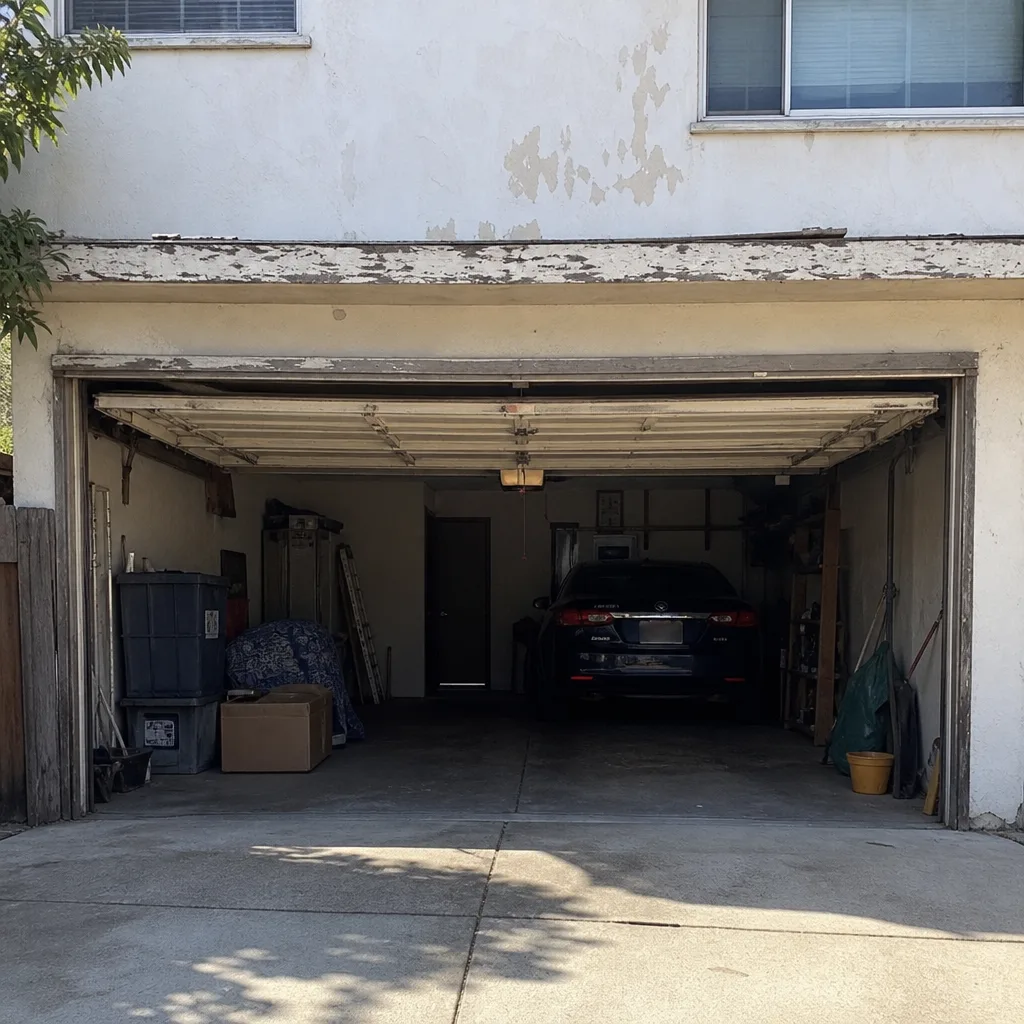 Before
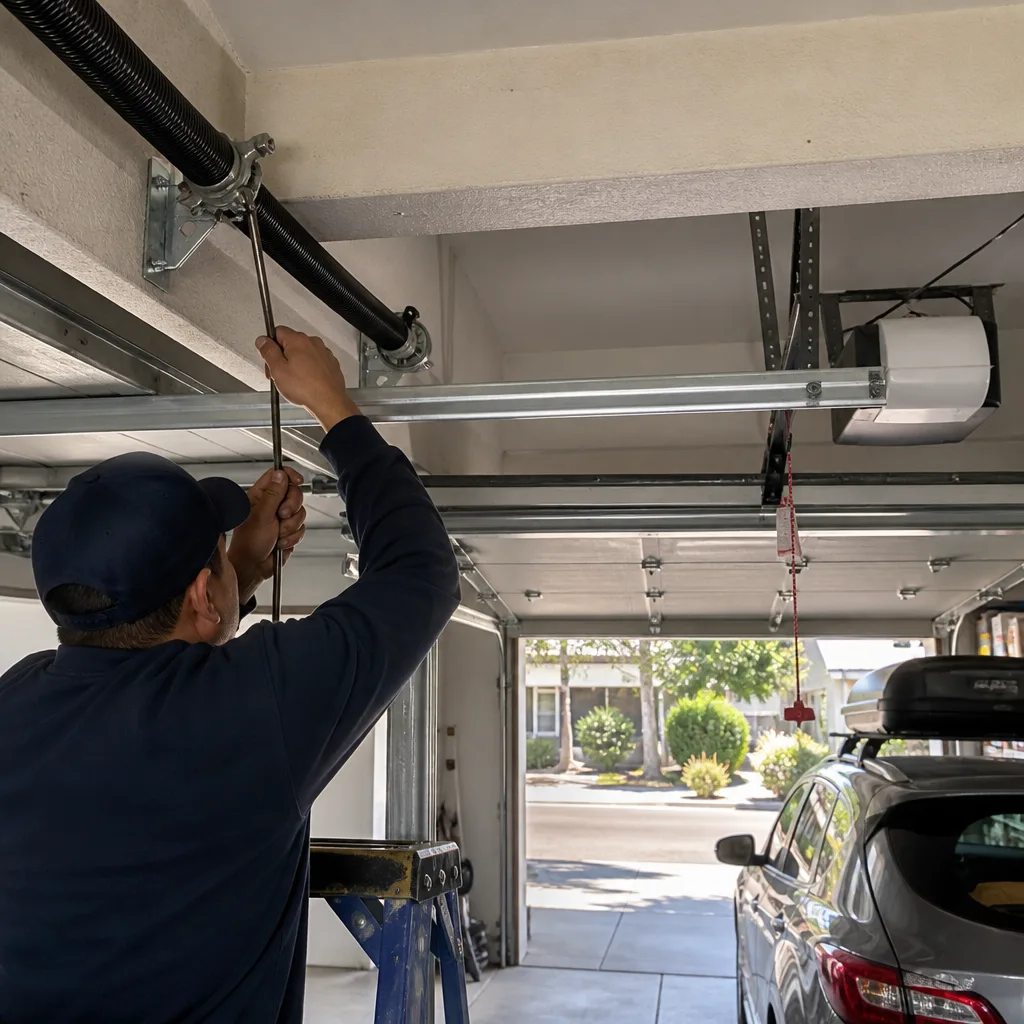 After
When to Call a Professional
A snapped spring, a snapped cable, a door hanging off its track, a door that reverses for no clear reason, or an opener that runs but won’t move the door: these are all professional calls. The spring and cable carry enough stored energy to cause serious injury, and the door itself weighs between 150 and 400 pounds. This is not a DIY moment. If the door is making a new sound or moving differently than it did last week, that’s also the time to get it looked at before a small issue becomes a full failure. Willow Garage Door Repair offers free estimates in Downtown San Diego, call (866) 321-6057 and we’ll tell you what we think before any work is scheduled.
Frequently Asked Questions
Single torsion spring replacement in Downtown San Diego typically runs $180 to $280 including parts and labor. Replacing both springs proactively runs $280 to $420 total. Coastal corrosion shortens spring life, so on doors within three miles of the bay, we often recommend replacing both springs at once rather than paying for labor twice. Call (866) 321-6057 for an exact quote on your door size and spring type.
Most spring, cable, and track repairs in Downtown San Diego can be completed the same day the call comes in, because the parts are carried on the service vehicle. Opener logic board replacements may require a day if the specific board isn’t in local stock. Full door replacements are scheduled, not same-day, because they involve measurement, ordering, and installation time. Call (866) 321-6057 and we’ll tell you honestly which category your repair falls into.
No, not unless the door’s actual condition is different from what you described. The price is quoted and agreed before any work starts. If we open the door and find additional damage, we stop, show you the issue, and get a new agreement before proceeding. You never come back to a surprise invoice. Free estimates are available at (866) 321-6057.
Yes, for the repairs we see most often in Downtown San Diego: torsion springs in common sizes, cables, rollers, hinges, track hardware, and opener gears, belts, and logic boards for the major brands including LiftMaster, Chamberlain, Genie, and Raynor. If we don’t have the exact part, we’ll tell you before the service call is scheduled, so you’re not paying a trip fee for nothing.
Repairs that don’t change the exterior appearance of the door, like spring, cable, track, or opener work, typically don’t require HOA approval. Replacements or visible panel changes usually do. Check your building’s governing documents before scheduling a replacement, or ask us to flag what might need review when we inspect the door.
Salt air deposits chloride on metal surfaces, and when downtown humidity rises, those chlorides accelerate rust and pitting. Springs, cables, and track hardware are all affected. The practical solution is more frequent inspection and earlier replacement of corroded components, not a different brand of hardware. In our experience servicing the Downtown San Diego area, doors within three miles of the bay benefit from inspection every six months.
The Bottom Line
A garage door in Downtown San Diego isn’t the same machine it would be in Poway or Santee. Salt air, tight parking, below-grade humidity, and HOA rules all shape what breaks and how it should be fixed. The practical takeaways: inspect coastal doors every six months, replace both springs together, don’t ignore new noises, and know whether your project is a repair or a replacement before you call. If the door is acting up, call (866) 321-6057 for a free estimate, and we’ll give you a straight answer on what’s actually wrong and what it costs to fix.
Written by the team at Willow Garage Door Repair, serving Downtown San Diego since 2013.